


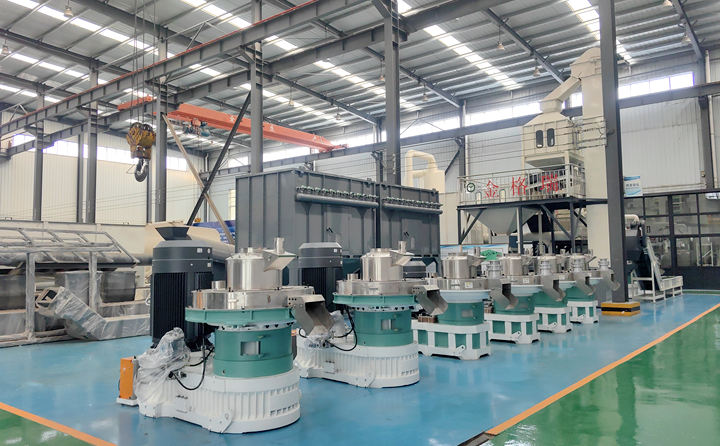
As the core conversion equipment for comprehensive utilization of forage, the alfalfa pellet machine transforms dispersed and large volume forage into high-density, easy to store, and versatile granular products, solving the pain points of difficult processing, low utilization rate, and low added value of forage, and providing key support for the development of diversified, large-scale, and high-value forage resource utilization. The following analysis focuses on its core values, diverse application scenarios, comprehensive benefits, and development trends:
1、 The core value of alfalfa pellet machine: breaking the “conversion bottleneck” of grass utilization
The alfalfa pellet machine achieves the “shape reshaping” and “value upgrading” of forage through an integrated process of “crushing → conditioning → compression molding → cooling”. Its core advantages are reflected in:
Capacity reduction and efficiency improvement: After compression, the density of alfalfa grass increases from 0.1-0.2g/cm ³ to 1.1-1.3g/cm ³, reducing its volume by 70% -80%, making it easier for long-distance transportation and storage (such as 1 ton of pellet fuel only requires 1.2m ³ of storage space, while the original grass requires 5-6m ³).
Homogeneous stability: The moisture content, calorific value (usually 15-18MJ/kg, close to medium coal), and combustion efficiency (≥ 85%) of the formed particles remain stable, solving the problems of insufficient combustion of the original grass and high smoke pollution.
Strong adaptability: It can handle various types of grass straw sawdust such as wheat, corn, rice, cotton, peanut shells, etc., and can produce particles of different specifications by adjusting the mold aperture (3-12mm) to meet the needs of different scenarios.
2、 Diversified application scenarios: from “single incineration” to “full chain resource utilization”
Relying on the conversion capacity of alfalfa pellet machines, forage has transformed from traditional “agricultural waste” to “renewable resources” in various fields such as energy, agriculture, and industry, forming a diversified utilization system:
In the field of biomass energy: replacing fossil fuels and promoting the transition to green energy
The biomass pellet fuel produced by alfalfa pellet machine is a mature application direction, widely used in:
Civil heating/cooking: replacing loose coal and liquefied gas, widely promoted in the “clean heating” project in rural areas of northern China (such as biomass heating furnaces equipped with pellet fuel in various parts of China, which can consume 2-3 tons of grass pellets per household per year and reduce CO ₂ emissions by about 4 tons).
Industrial heating/power generation: As a boiler fuel for biomass power plants, printing and dyeing plants, and food processing plants (such as Guoneng Group’s biomass power plants, 1 ton of pellet fuel can generate about 400 kWh of electricity, reducing SO ₂ emissions by more than 90% compared to coal-fired power generation).
Biomass gasification/liquefaction: Particle fuels are converted into synthesis gas through gasification furnaces, or liquid fuels such as biodiesel and ethanol are produced through liquefaction processes, achieving the full chain conversion from solid waste to clean energy.
3、 Multidimensional comprehensive benefits: ecological, economic, and social “triple win”
The diversified utilization mode driven by alfalfa pellet machine not only solves the problem of air pollution caused by grass burning, but also creates significant comprehensive benefits:
ecological benefit
1. Reduce grass burning: Processing 10000 tons of grass can reduce CO ₂ emissions by about 12000 tons and SO ₂ emissions by about 80 tons;
2. Carbon sequestration and sink enhancement: The combustion of grass pellet fuel is “carbon neutral”, contributing to the “dual carbon” goal;
3. Recycling: Reduce the consumption of resources such as fertilizers and coal, and lower agricultural non-point source pollution
economic benefits
1. Increase in farmers’ income: Each acre of grass can be processed into 0.5-0.8 tons of granules, calculated at 800-1200 yuan per ton, resulting in an increase of 400-960 yuan per acre;
2. Industry driven: It promotes the development of industrial chains such as grass harvesting, storage and transportation, pellet processing, and equipment manufacturing. One medium-sized pellet factory can drive employment for 50-80 people;
3. Cost savings: Enterprises using granular fuel can reduce costs by 10% -15% compared to coal, and by 20% -30% compared to liquefied gas.
social benefits
1. Relieve the management pressure of “grass burning ban” and reduce fire hazards;
2. Promote the upgrading of rural energy structure and improve the living environment;
3. Assist in rural revitalization and cultivate new green driving forces in agriculture.
summary
The alfalfa pellet machine is not only a “converter” for grass to turn waste into treasure, but also an “engine” for promoting the transformation of comprehensive utilization of grass from “singularity” to “diversification and high value”. With the advancement of technology, policy support, and the improvement of the industrial chain, it will play a more central role in the green development of agriculture, the achievement of the “dual carbon” goal, and rural revitalization, truly realizing the goal of “one grass driving one industrial chain and activating a green economy”.
Post time: Sep-05-2025


